


Diples are an aristocratic, refined dessert, with very specific requirements in their preparation, and one could say they are also somewhat expensive, since their success depends on ingredients of excellent quality. In short, they are a true “diva” dessert.
In Laconia, diples are associated with weddings and christenings; in other words, they are the sweet of celebration.
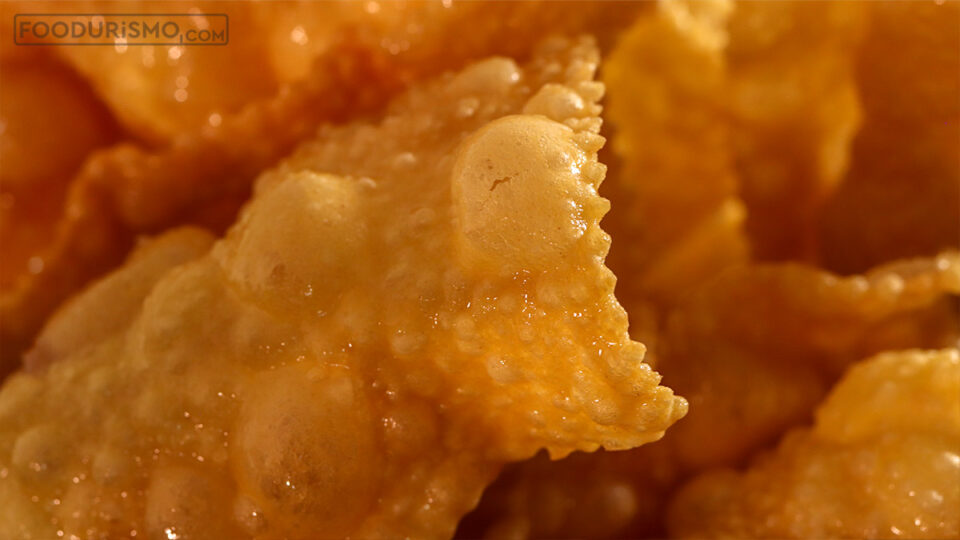
In my village, Niata, they are the traditional Easter dessert and much less so a Christmas one. At Christmas, especially in earlier years, the homemakers of Niata used to make melomakarona, kourabiedes, and baklava, while diples were the “special dessert” of Easter. For me, diples were the “sinful” dessert that often “broke” the fasting of Holy Week.
The Celebration of Joy
Diples are not only the dessert of a celebration; their very preparation, from beginning to end, is a celebration in itself.
The selection of ingredients is done with care and strictness. The eggs must be very fresh. The honey is always of top quality. The oil is strictly good-quality olive oil and never oil that has been used many times. The walnuts are cracked at the last moment so they do not turn rancid.
The people who will do the main work for the diples must be experienced and skillful.
Diples are such a beloved and widespread dessert in the Peloponnese because their basic ingredients could be found in every household and, most of the time, were produced by the family itself.
A Task for Many Hands
Diples are made by many hands; after all, there are so many major and minor tasks involved in their preparation.
The most skillful person is assigned to each “station.” The one with strong arms takes on the kneading, the one who can make fine dough sheets takes the rolling pin, the one who does not fear the hot oil and is skillful at rolling goes to the frying, and the one who achieves the right honeying handles the honey.
In Niata, even today, there are some women who are renowned for their mastery in rolling out the dough sheets. One such woman in the past was my grandmother, Toula, who would go to any house that asked for her to roll out sheets, always bringing her own rolling pin because that was the only one that suited her.
Diples, admittedly, are a dessert of high standards and demands. But they are so unique in their preparation, so delicious, crunchy, and sweet through and through, that just one bite is enough to make you forget entirely the little fatigue they require—they are worth it completely.
Ingredients
For the dough
- 12 fresh eggs
- juice of half a lemon
- ½ teaspoon baking soda
- ½ teaspoon baking powder
- half a wine glass of cognac
- 4 tablespoons olive oil
- 1 tablespoon sugar
- 3–4 small packets vanilla powder
- 50 g melted cow’s butter
- a little salt
- as much flour as needed, about 1 kilo (the quantity cannot be exact because it depends on the size of the eggs and on the flour itself, that is, how much it absorbs)
- plenty of olive oil, seed oil, or a mixture of the two for frying (about 3.5 liters, to be poured into a deep pot)
For the syrup
- 1 kilo good-quality honey
- 2 small packets vanilla powder
- 1 Greek coffee cup water (optional, to thin it slightly)
For the garnish
- 1 cup ground walnuts
- 1 tablespoon ground cinnamon
- 1 tablespoon powdered sugar (optional)
- 2–3 small packets vanilla powder
With the Foodurismo automatic ingredient converter, easily see how many grams or ml correspond to each cup. Try it here!
Instructions
In the bowl of a mixer or in a large bowl, crack the eggs carefully so that no small pieces of shell fall in.
Beat the eggs, sugar, and vanilla on medium to high speed until the mixture turns pale and creamy.
Stop the mixer for a moment.
Add the baking soda to the lemon juice and pour the foaming mixture into the egg mixture. Add the cognac as well and continue beating for another 2 to 3 minutes.
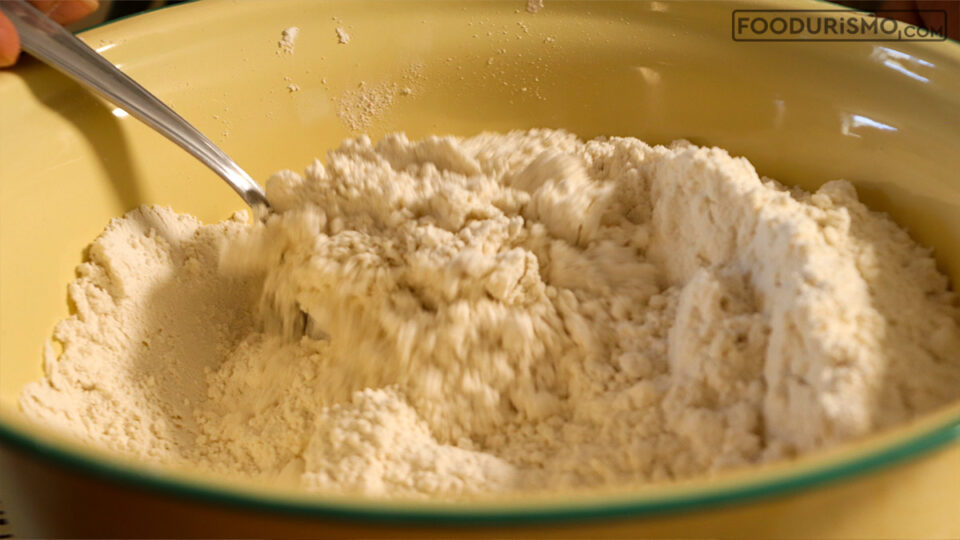
Then add the baking powder to the flour, mix, and begin adding the flour to the egg mixture one spoonful at a time while the mixer beats at a relatively low speed.
At some point, change the mixer attachment, using the dough hook.
Of course, you can also incorporate the flour by hand, but that is rather tiring work, and it is better to save your strength for a little later, when kneading by hand will probably be unavoidable.
Once the mixture has absorbed all the flour, begin adding half of the melted butter little by little, waiting each time for the amount of butter you added to be absorbed.
Proper Kneading
At this point, take the dough out of the mixer and transfer it to a basin or countertop.
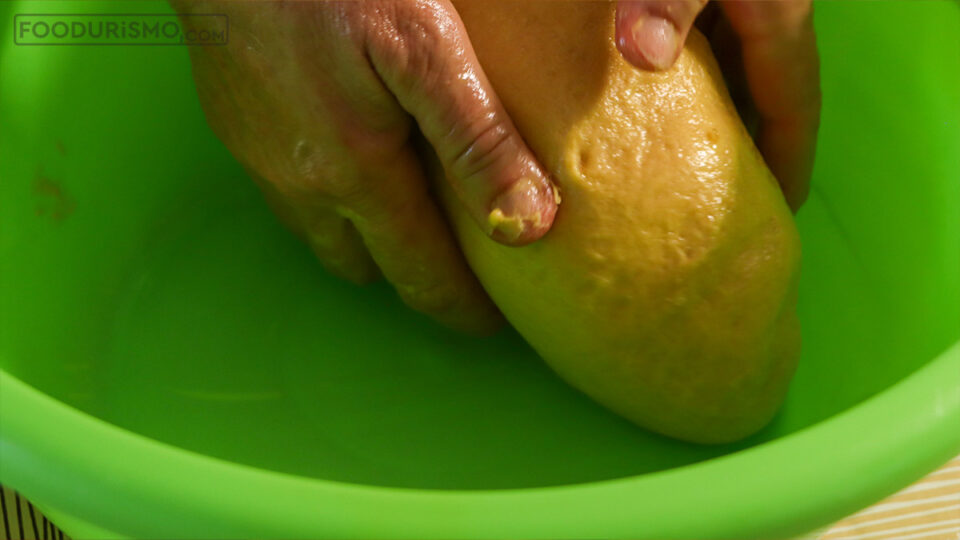
Now it is time for kneading. Start kneading the dough with your fists, adding the rest of the melted butter as well.
The dough should be smooth, sturdy, and slightly “elastic.”
Cover the dough well with plastic wrap and let it “rest” for 30–40 minutes.
Cut off a piece of dough the size of an orange in order to roll out the sheets.
The Skill of Rolling Out the Sheets
Shape the piece of dough into a ball, sprinkle a little flour like rain over a stable surface, and start rolling out the sheet with a rolling pin. The logic is the same as for pie sheets, only here a bit more dexterity is needed. In pie dough, a small imperfection is “forgivable,” but the sheets for diples must be rolled out evenly, meaning each sheet should have the same thickness everywhere, not be thicker in some places and thinner in others, and have no holes.
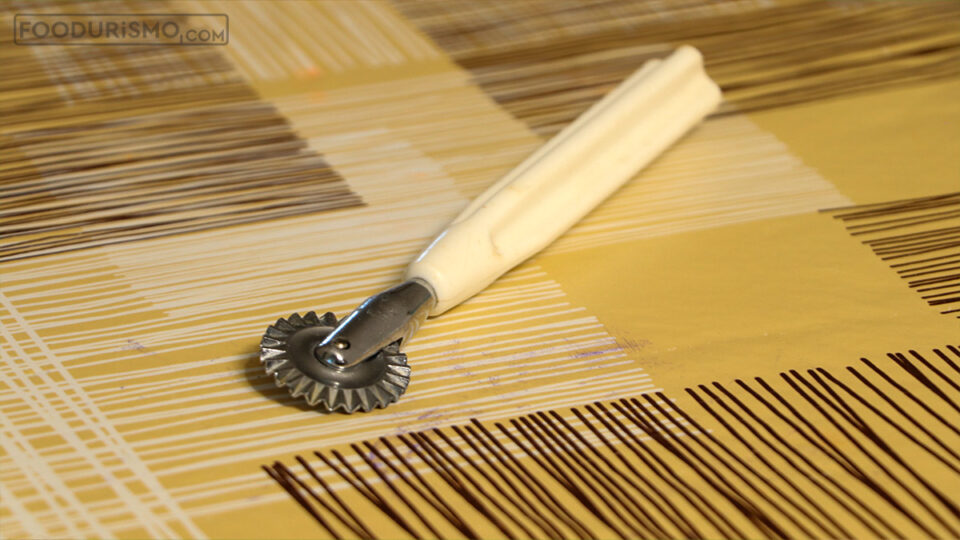
At this point, we attempt to “square the circle.” Using a knife or pastry wheel, cut the round sheet at four points so that, more or less, you end up with a rough square.
Then cut horizontal, wide strips, about the width of a palm. If your hand is not very steady, you can use the rolling pin itself as a “ruler” to cut the diples evenly. Then cut vertically as well, so that you have long rectangular pieces of dough, and place them on a clean kitchen towel, covering them so they do not dry out until frying.
Once all the dough has been rolled into sheets and carefully cut into pieces, it is time for frying.
The Technique of Proper Frying
Pour the oil into a wide pot. Heat the oil well over high heat. It is good to use a gas burner or induction hob that produces strong heat.
To make sure it is ready for the diples to fry properly, drop a piece of dough sheet into the hot oil, and if it “jumps up” and starts frying with bubbles, then it means we are ready to fry the dipla.
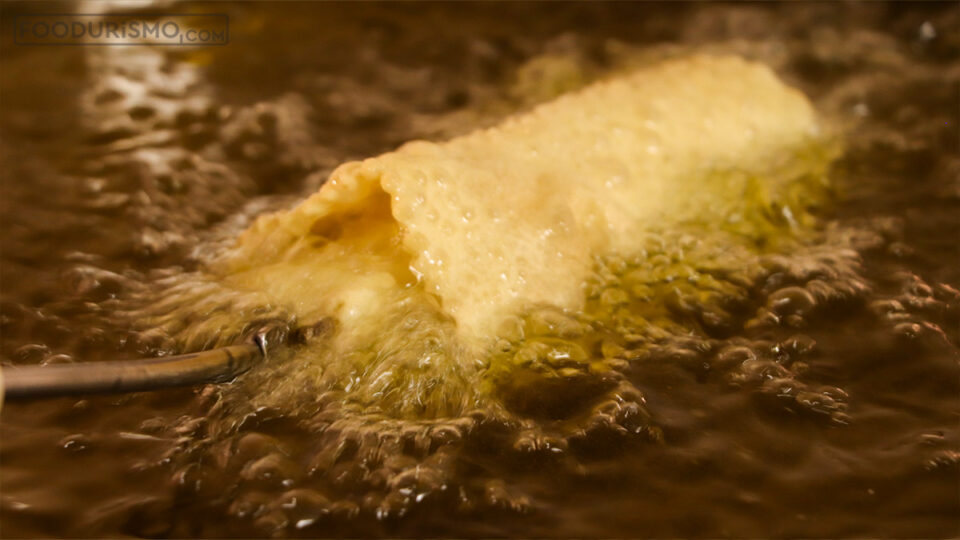
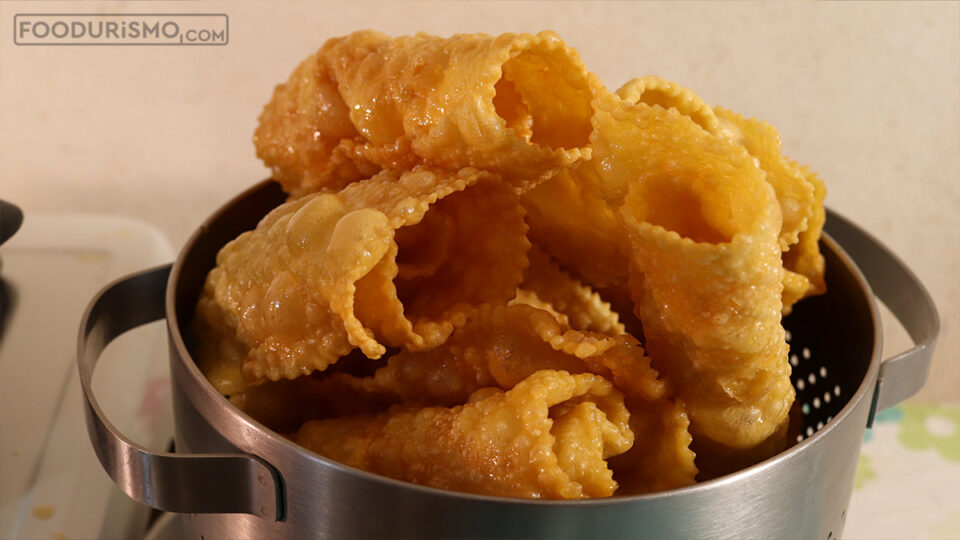
Drop one piece of dough at a time, that is, one raw dipla, into the hot oil. For a few seconds it sinks into the oil, but immediately “jumps” to the surface, firms up slightly, starts bubbling, and turns golden. All this time, lightly press the dipla with two long-handled forks so that you do not burn yourself, and once it takes on the texture and appearance of a “boiled lasagna sheet,” carefully begin rolling it up—with the help of the forks—into a roll, which must be just right, meaning neither too loose nor completely tight. Submerge the dipla with the forks in the hot oil for 5–10 seconds so it takes on a golden color.
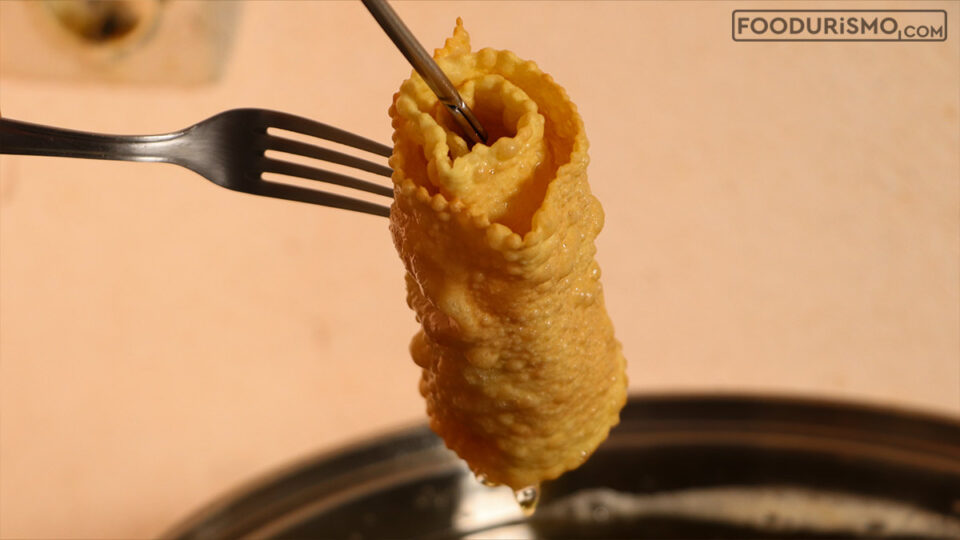
Drain lightly and place the dipla in a strainer.
Follow this process until all the diples are fried. Stack the fried diples in a large basin or basket lined with greaseproof paper. They will wait for us there for the honeying.
The most time-consuming and demanding part of the process has just ended.
Prepare the garnish mixture. Mix the cinnamon with the powdered sugar and the ground walnuts and set it aside.
The Honeying
Pour the honey into a deep pot. If using the water, add it at this stage. Add the vanilla as well. Heat the honey over medium heat, just until it melts and becomes like a thick syrup; under no circumstances should it burn or boil.
Dip the diples into the syrup one by one, turning them on every side so they are well coated with honey, then drain them. This process should be done with the help of two forks.
Place the honeyed diples in a strainer so the excess syrup can drain away.
Here I want to tell you that very often in diples recipes we find, besides honey, sugar and water included in the syrup recipe. In this specific recipe that my mother makes, she avoids the water and sugar. However, you can follow that method too if you do not want to use a large quantity of honey.
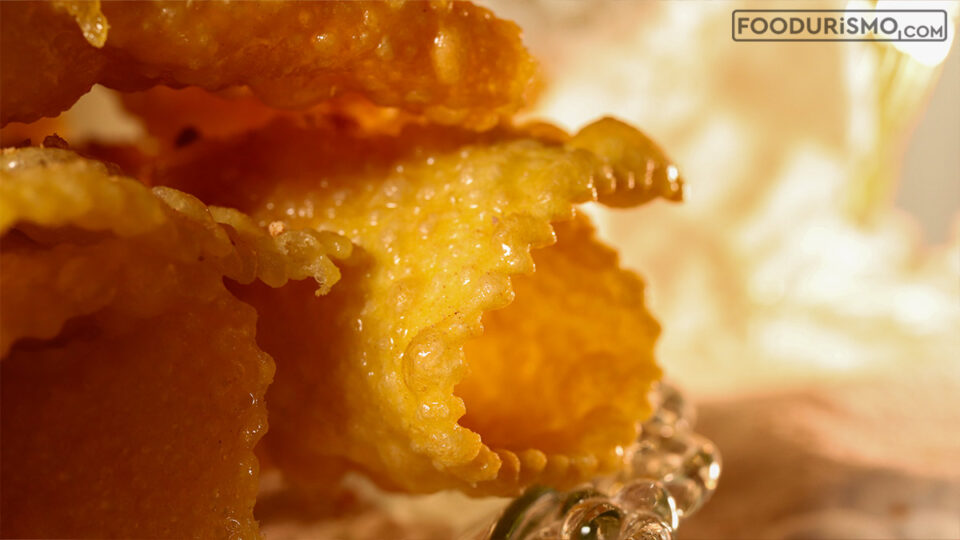
As soon as we complete the honeying process, let the diples cool and store them in a basket, well covered with greaseproof paper and aluminum foil.
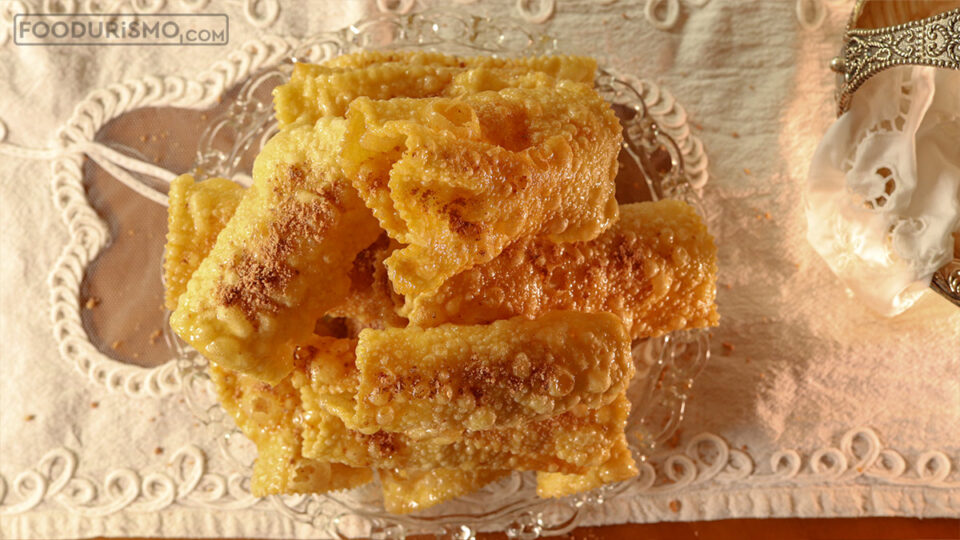
When we want to serve them, arrange them on a tray or platter and sprinkle them with the ground walnut mixture.
To instantly learn about all our latest updates, follow foodurismo on Facebook, on instagram, on pinterest and also subscribe to the foodurismo channel on youtube
Find the recipe on our YouTube channel: