


I first tried pastourma at a relatively mature age, somewhere around 30. I was on vacation in Halkidiki and we went to a very nice restaurant in Afytos, “Sousourada” by Nikos Katsanis, which his family continues to run since he passed away.
The chef suggested serving us dishes the way he himself would like, and of course we agreed.
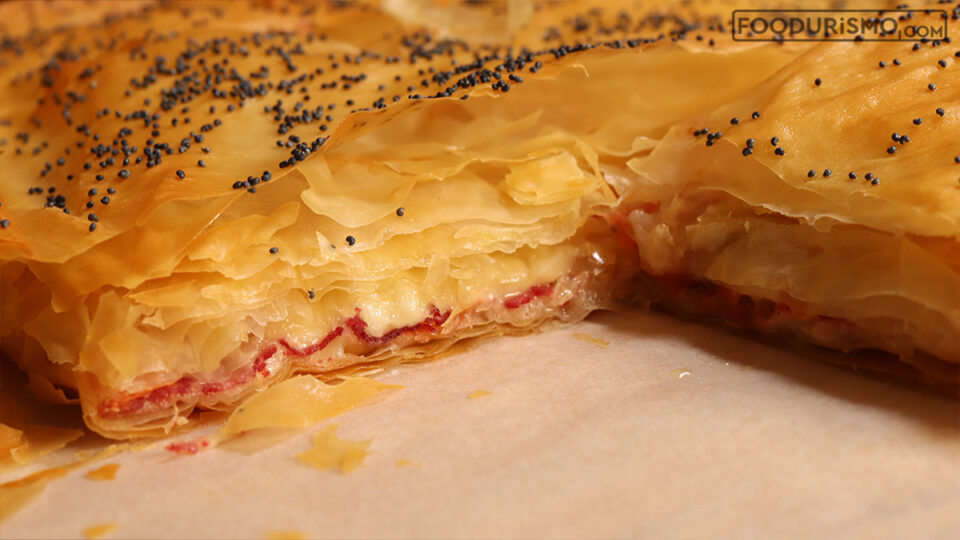
There are three things I clearly remember from that evening: a wonderful Xinomavro from Naoussa that we drank, an amazing briam, whose perfectly cooked vegetables I still remember to this day, and a fantastic and completely new-to-me omelet, which contained pastourma.
So that is how pastourma and I “met,” “shook hands,” and I decided that “he” and I were going to “make a life together.”
At home, my mother did not usually buy pastourma; you see, people from the Peloponnese do not use it much in their cooking.
However, ever since I first tried pastourma, I buy it at least 2–3 times a year, especially during the holiday season, to make a meze at home.
Its flavor and aroma are so distinctive that they elevate anything it is added to.
It is, of course, an ingredient with such a strong presence that it calls for a kind of “leading role,” meaning that we pair it with ingredients of good quality but mild flavor, so that we do not end up with a heavy and confusing result. In short, we let the pastourma “play ball” on its own.
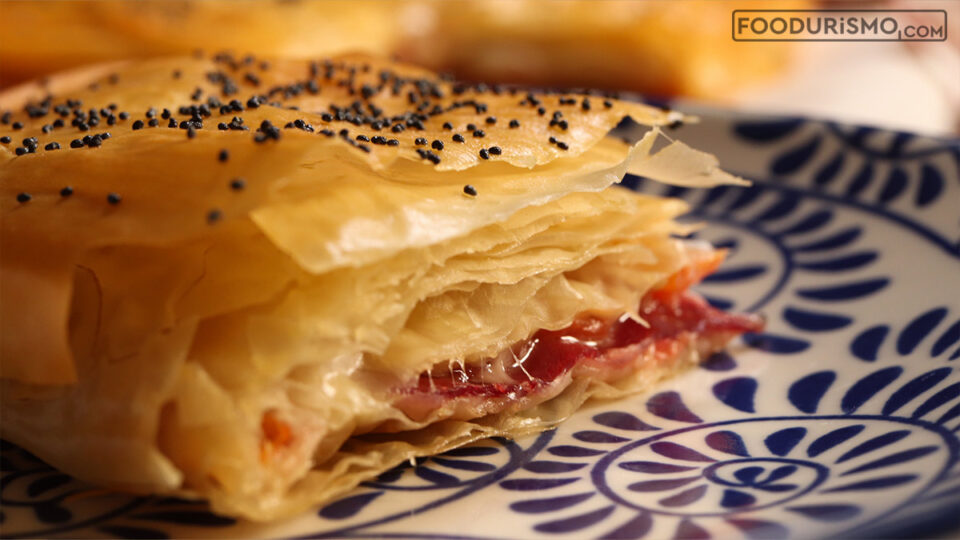
Also, if you are true aficionados and want to leave the fenugreek paste on the pastourma and make the pie more intensely flavored, it would be a good idea to add 2–3 tablespoons of yogurt thinned with a tiny bit of water, so that its taste becomes more balanced and pleasant.
On foodurismo there is also another easy and quick recipe, pastourmadopita bites, which are also well worth making.
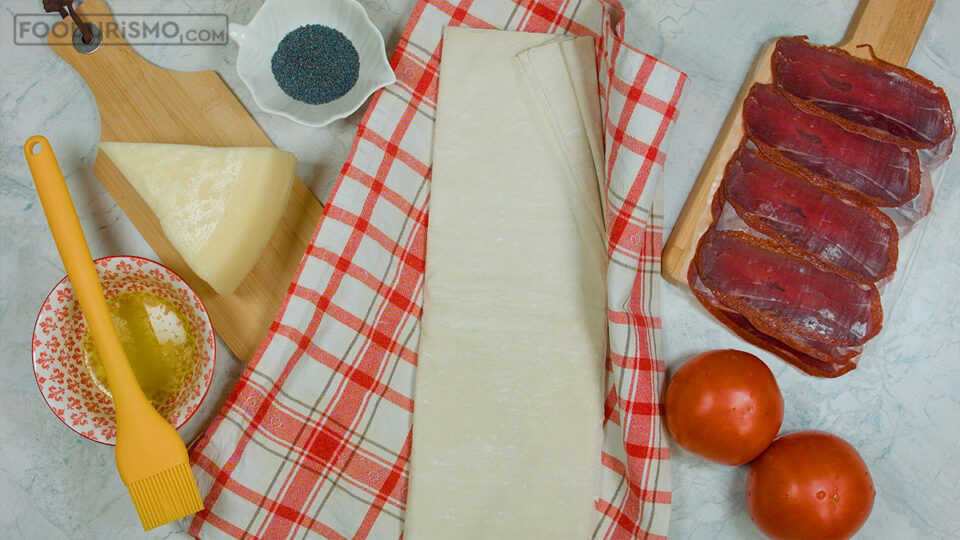
Ingredients for a 35 x 25 cm baking dish
- 6 phyllo pastry sheets
- 12 slices pastourma
- 350 g kasseri cheese, sliced or grated
- 2 ripe, firm tomatoes
- ½ cup mixture of olive oil and melted butter
- 1 tablespoon poppy seeds or sesame seeds
With the Foodurismo automatic ingredient converter, easily see how many grams or ml correspond to each cup. Try it here!
Instructions
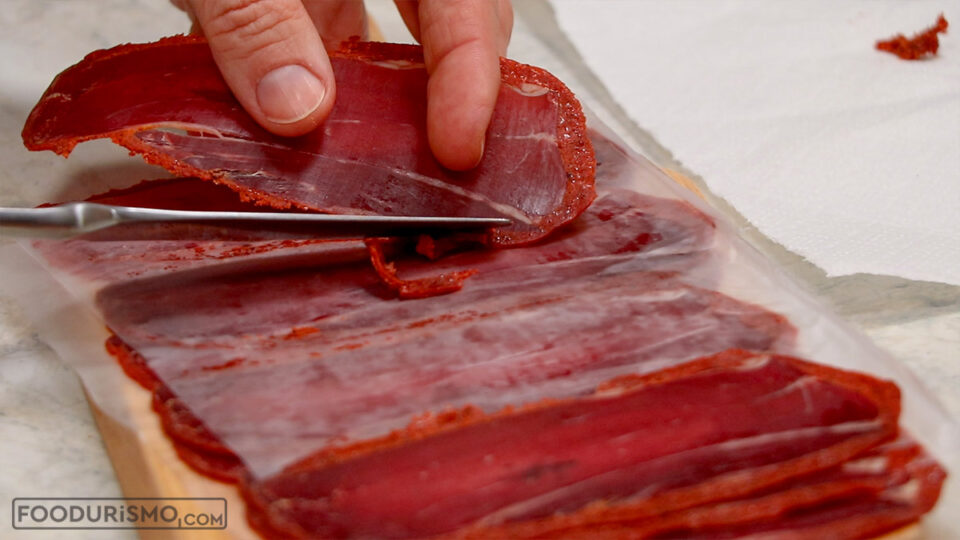
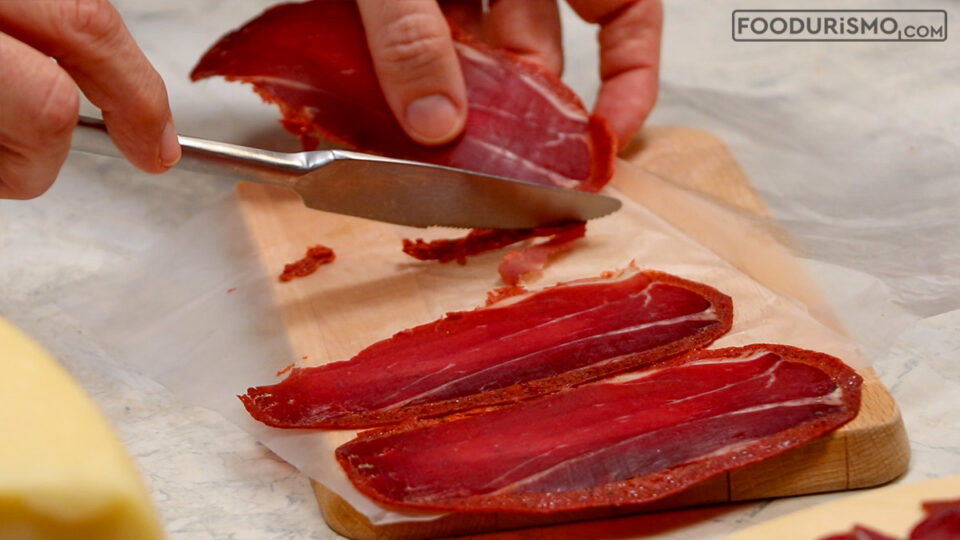
Using a knife, remove the fenugreek paste from the slices of pastourma, in other words, remove the red paste coating the cured meat.
Cut the kasseri into thin slices, if you bought it as a block.
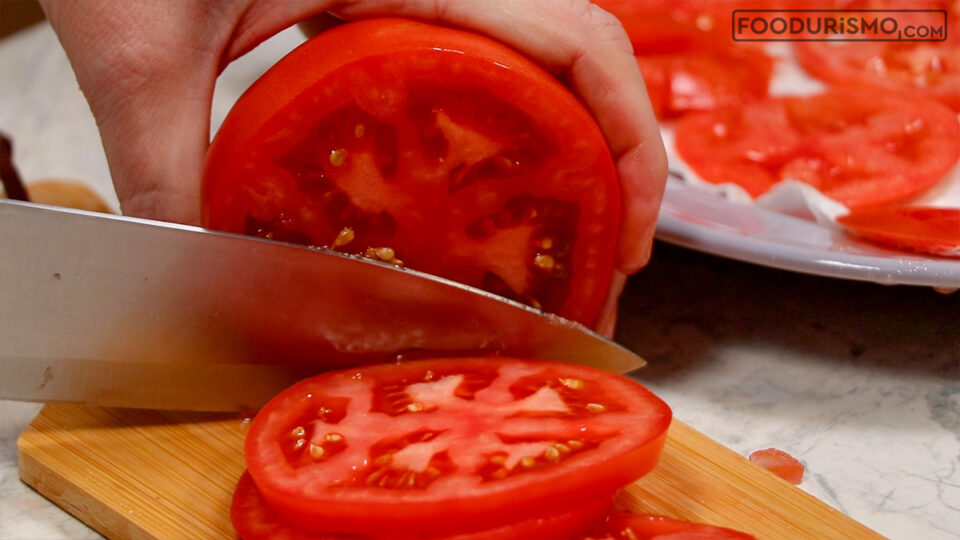
Slice the tomatoes and remove the seeds.
Then pat them dry with kitchen paper to remove excess moisture.
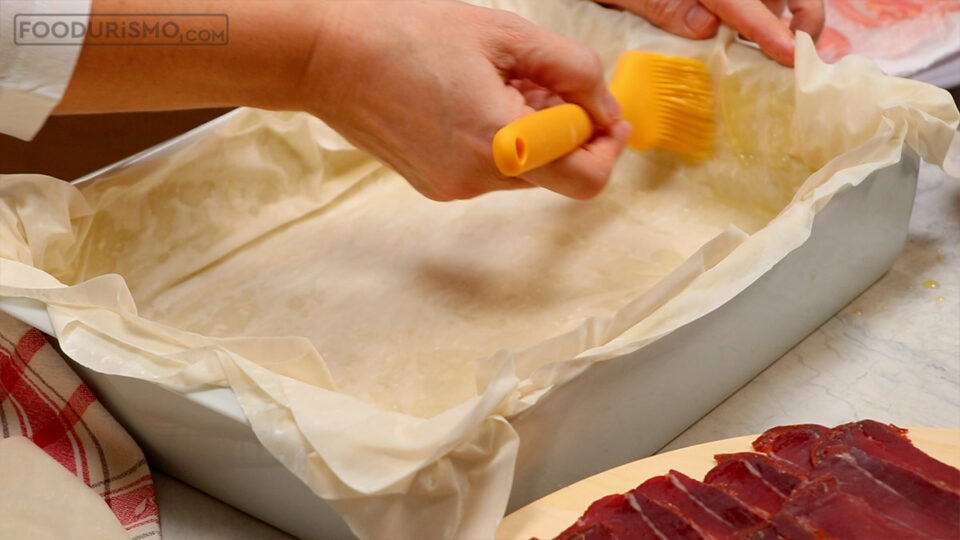
Brush the dish with the olive oil and melted butter mixture, lay down the first phyllo sheet, and brush again.
Repeat the process with 5 of the 6 sheets.
That is, lay five sheets at the bottom, leaving part of them hanging over the edges of the pan.
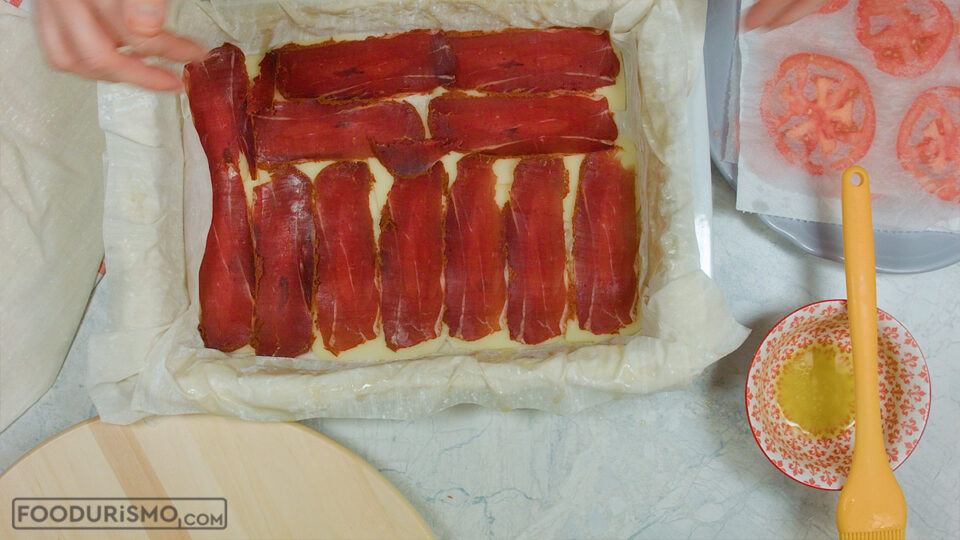
Spread half the amount of cheese, then place the slices of pastourma on top. Add the tomato slices as well and cover with the remaining kasseri.
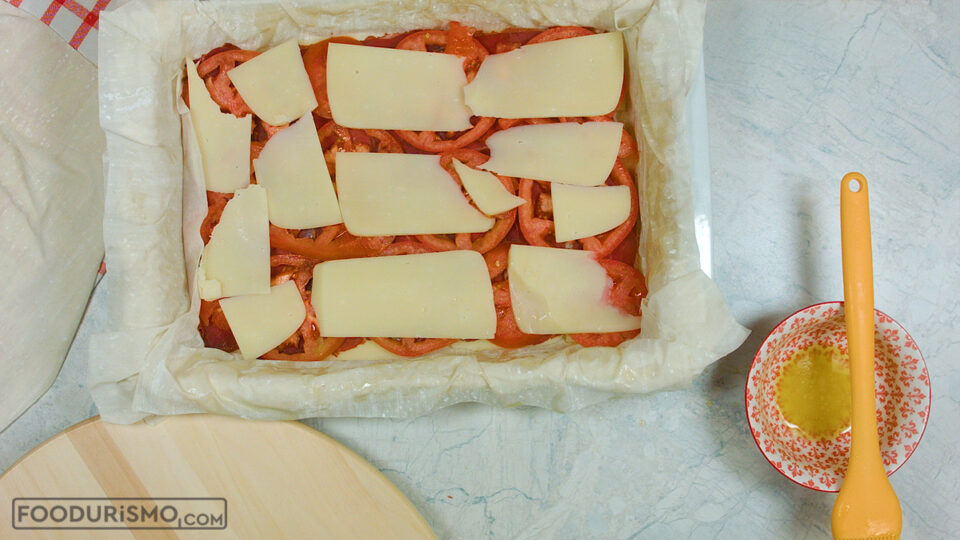
Fold in the overhanging parts of the sheets to close the pie, brushing with butter in between. Cover with the last sheet, which you fold in two. I prefer to do this because by folding the overhanging parts of the base sheets, I cover the surface well enough, so the sixth sheet, folded in half, is enough to cover the pie.
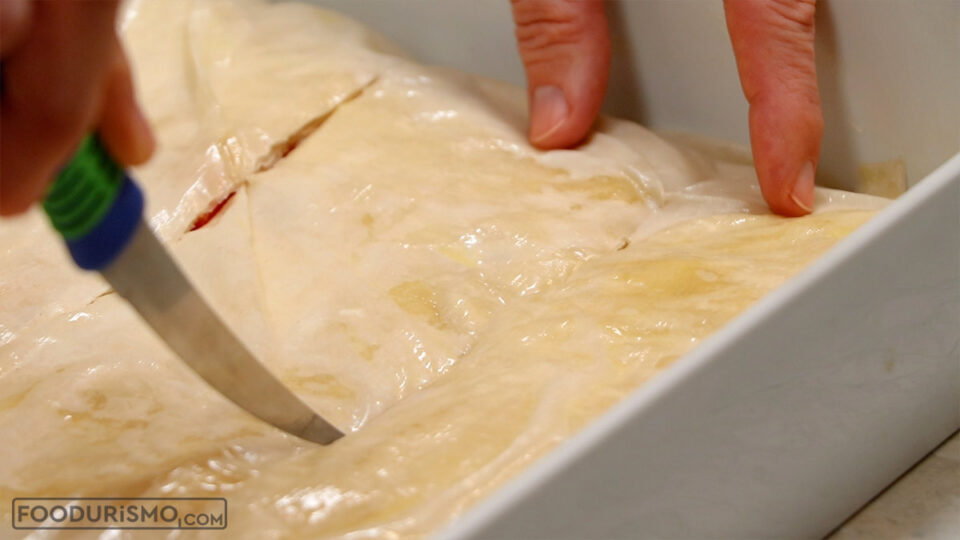
Brush with butter again. Score the pie with a sharp knife and sprinkle with poppy seeds or sesame seeds.
Bake the pie in a preheated oven for 40–45 minutes at 170°C.
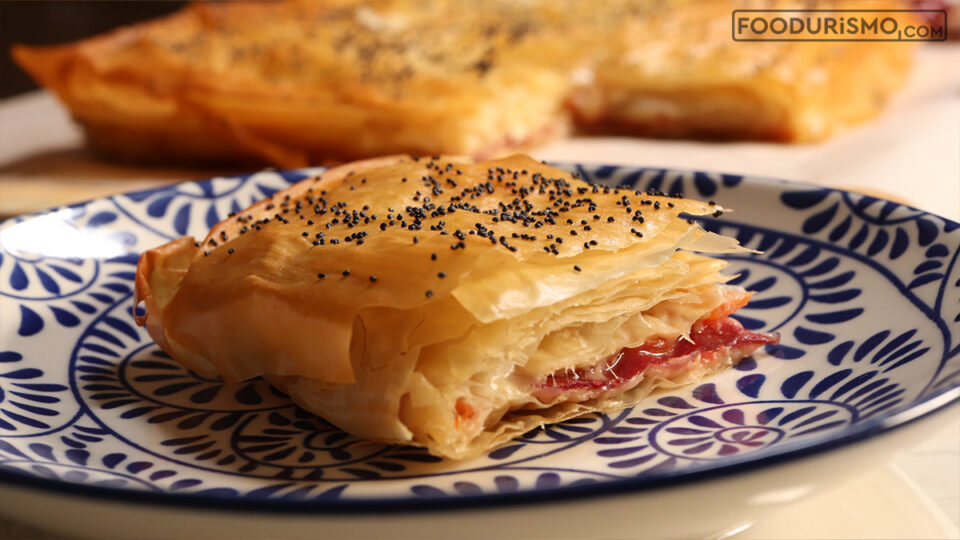
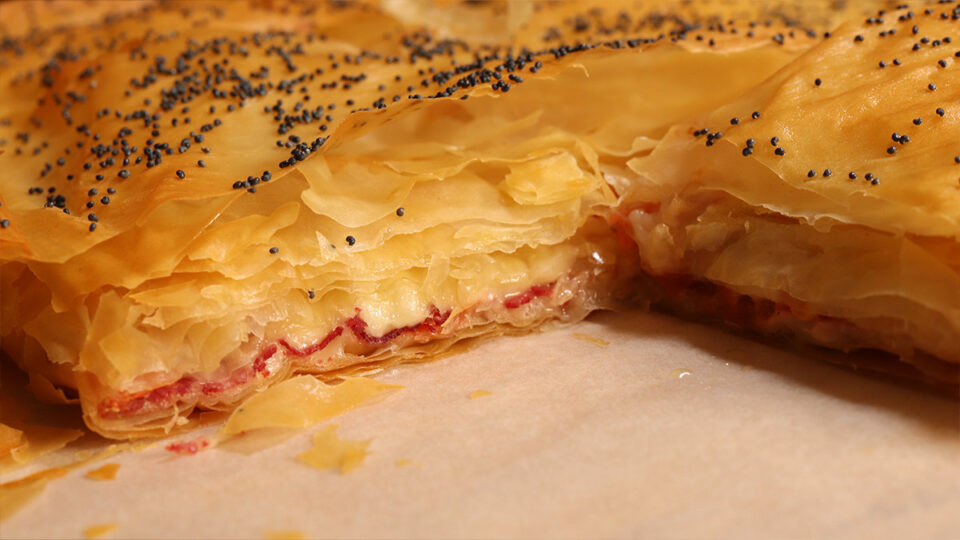
It does not need a high oven temperature, but rather a controlled and somewhat low one so that the inner sheets bake properly as well.
To instantly learn about all our latest updates, follow foodurismo on Facebook, on instagram, on pinterest and also subscribe to the foodurismo channel on youtube
Find the recipe on our YouTube channel: