


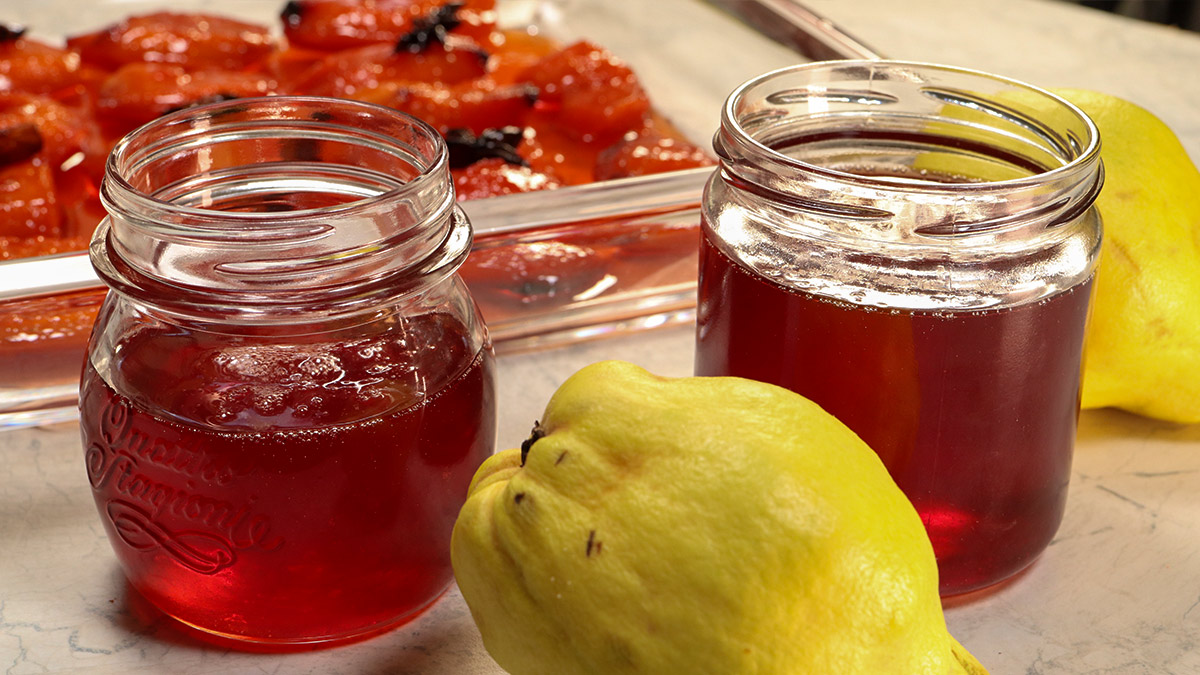
Quince paste is the most interesting way to use the peels and seeds of the fruit. The pectin in the seeds and the peel is what gives this delicious ruby-red jelly its texture.
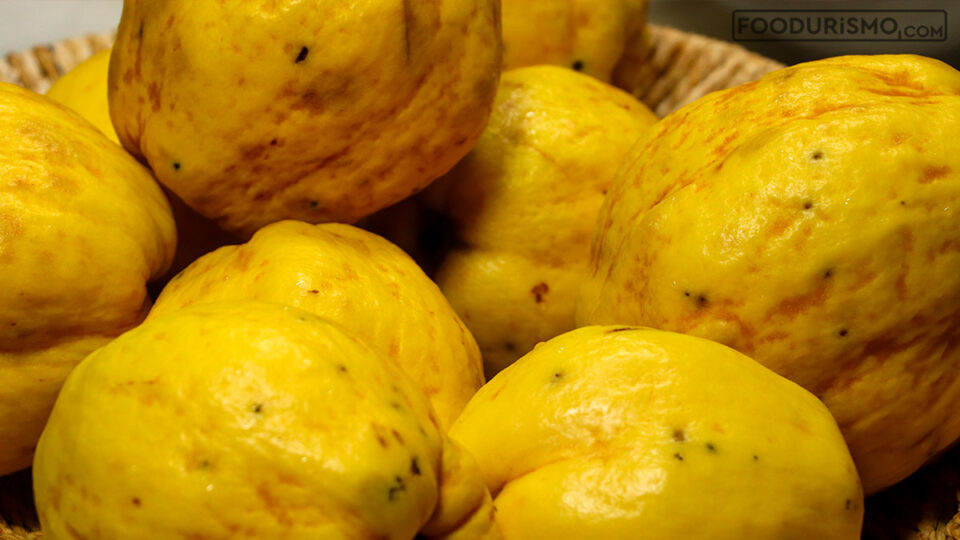
The quince season has been underway for quite some time.
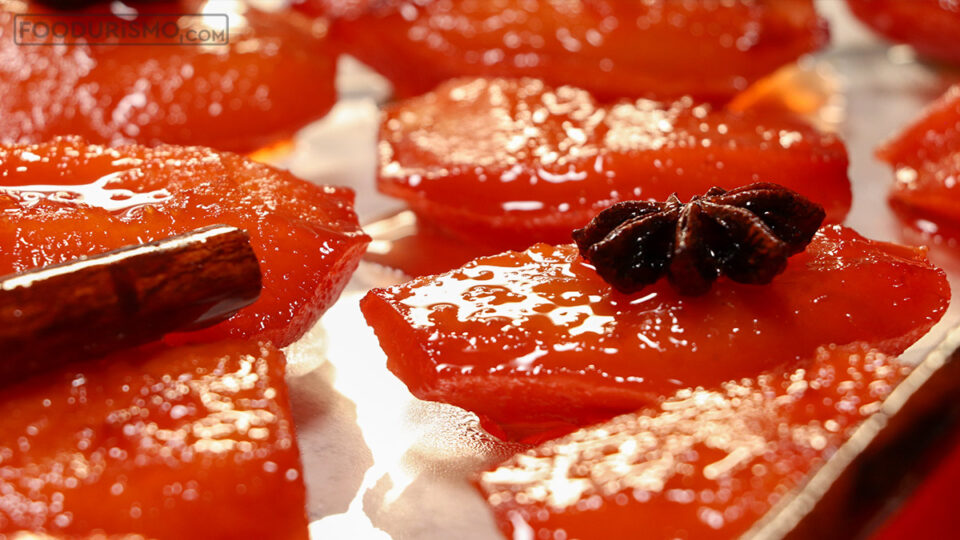
The baked quince dessert or the quince marmalade dessert are especially popular at this time of year. So it is easy to end up with plenty of seeds and peels that might otherwise end up in the trash or, at best, in the garden as compost for plants.
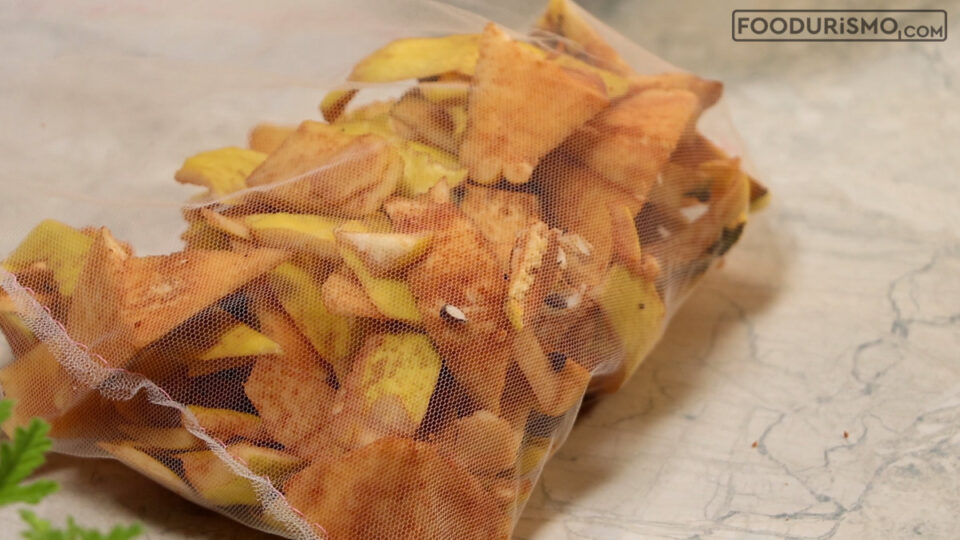
But the wisdom of household economy, which calls for using everything that comes into a kitchen, also gave rise to this delicious sweet.
An old-fashioned treat
My mother remembers tasting this sweet for the first time at the home of some of my father’s aunts. They served it as a spoon sweet, plain, with a few blanched almonds. They used to make quince paste because quince trees were a common tree in their gardens.
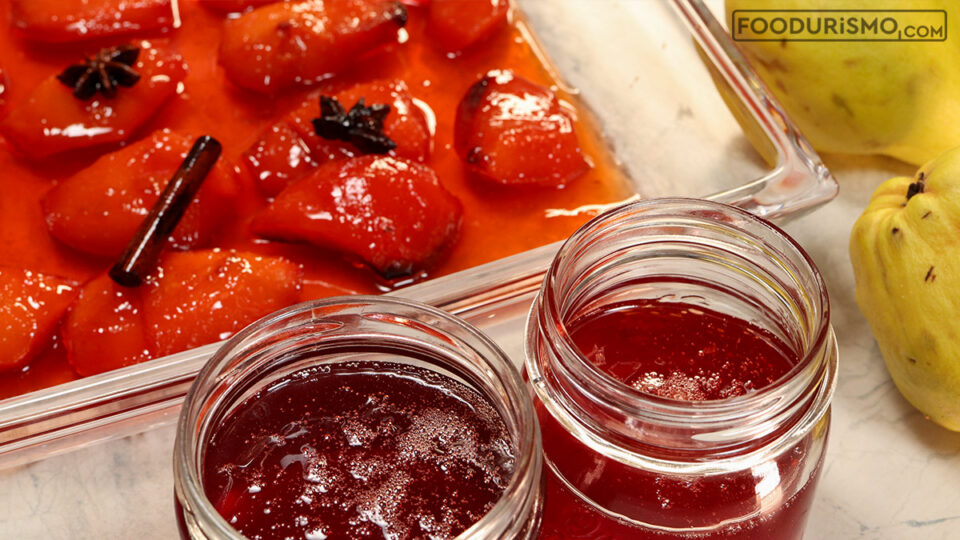
So this year quince paste was “revived” and it was a great success.
What is very interesting is that the paste can also be used in cooking and paired with savory flavors.
You can serve quince paste with cheeses and cured meats, or add some while cooking meat to enhance the flavor.
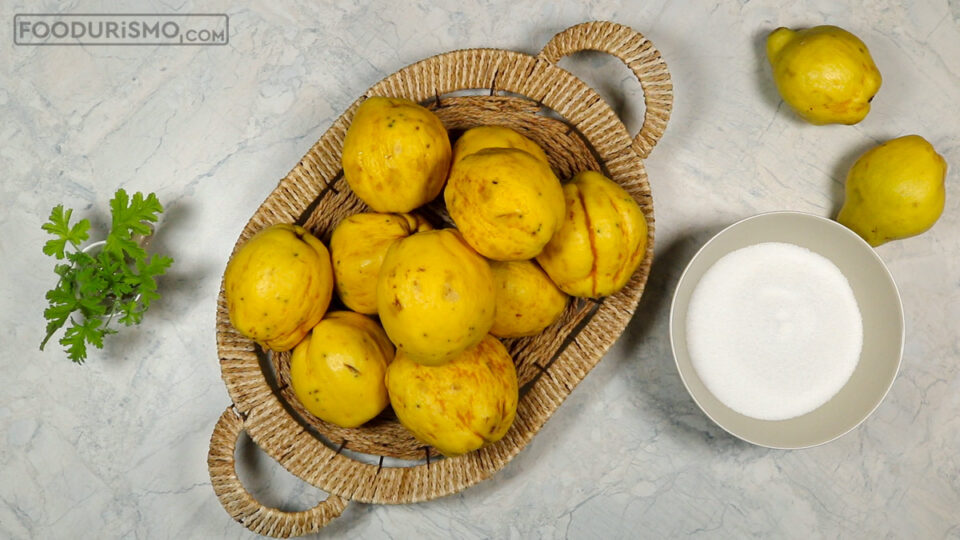
Ingredients for quince paste
- 10 quinces
- 500 g sugar
- a few sprigs of scented geranium
With Foodurismo’s automatic ingredient converter, easily see how many grams or ml correspond to each cup. Try it here!
Method
Wash the quinces with water.
Peel the quinces with a sharp knife. Keep the peels and the seeds.
Take a piece of muslin or gauze and place the quince peels and seeds inside it.
In other words, make an improvised pouch.
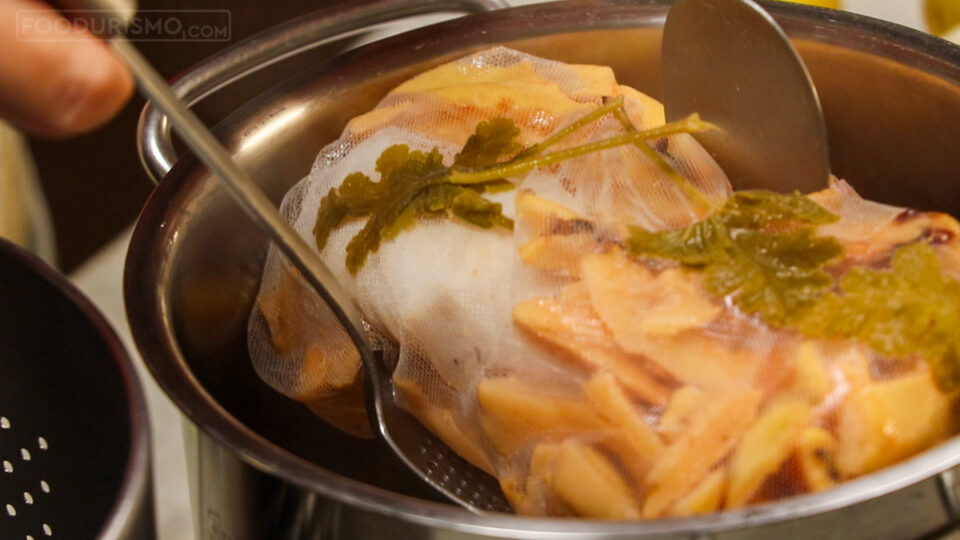
Place the pouch in a pot.
Pour in enough water to cover the quince peels. It took two liters of water.
Boil the quince peels for about 1 hour.
About halfway through the boiling, add the scented geranium leaves.
Place a strainer over a bowl. Carefully remove the pouch from the pot and place it in the strainer.
Let the pouch cool slightly and then start pressing it with your hands or with a spoon to extract as much juice as the peels have retained.
The liquid from the peels left in the pot can be passed through a sieve to remove any small bits that may be there.
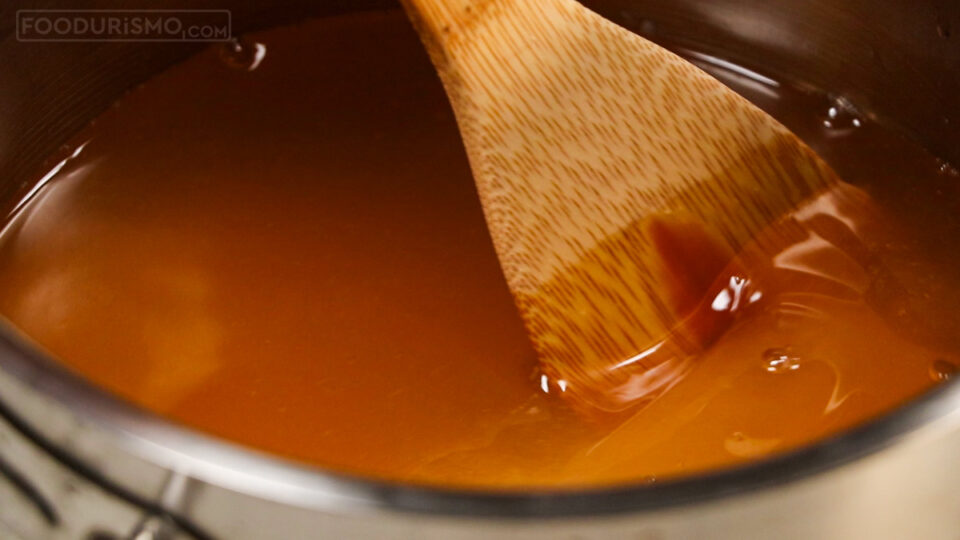
Add to the pot all the juice extracted by squeezing the pouch with the peels.
Add a little salt.
The proper setting point
The amount of liquid left after boiling the seeds and peels is one liter. Add half a kilo of sugar to it.
The general rule is to use two parts liquid and one part sugar.
Stir and let it boil over low heat until it sets.
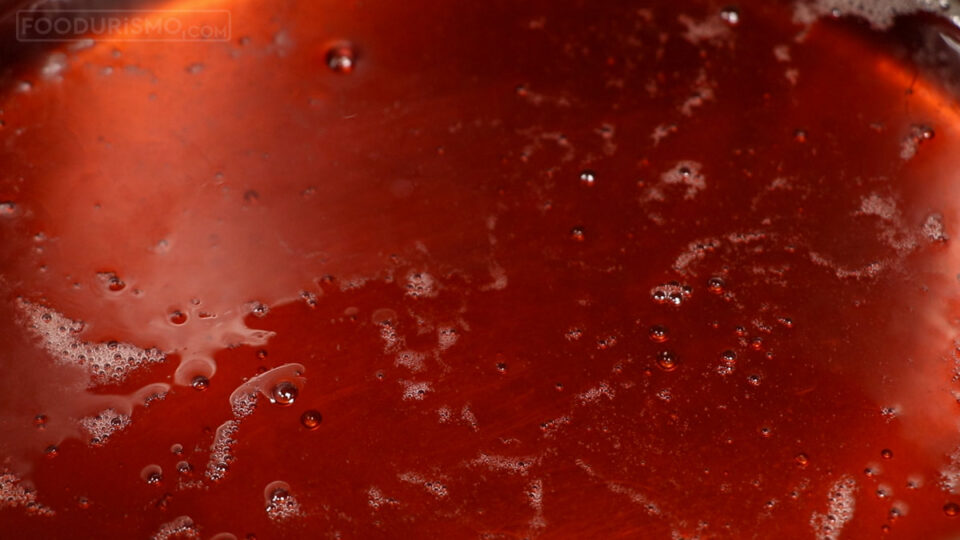
When half the original amount of liquid remains, that means it has set. The texture when you stop boiling will be like syrup. But once it cools, it will thicken a lot and become like jelly.
If you want to make sure the quince paste has reached the correct setting point, you can use the same method used for spoon sweets.
That is, take a spoonful of the liquid onto a small plate, and when it cools completely draw a line through it with your finger. If the line closes up, it needs a little more boiling.
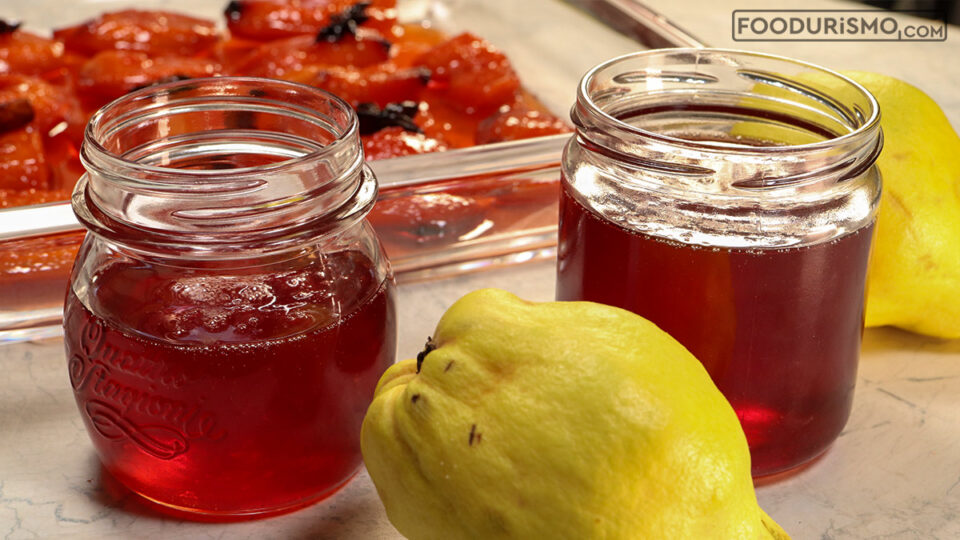
Pour the hot liquid into jars.
To stay up to date with everything new from us, follow foodurismo on Facebook, on instagram, on pinterest and also subscribe to the foodurismo channel on youtube